
Andrej Karpathy just deleted his entire project. The former Tesla AI director and one of the most respected figures in artificial intelligence had built a website that ranked every job in America by how likely it is to be replaced by AI. Within hours of going viral, the site was gone. But the data he uncovered is already reshaping how we think about work.
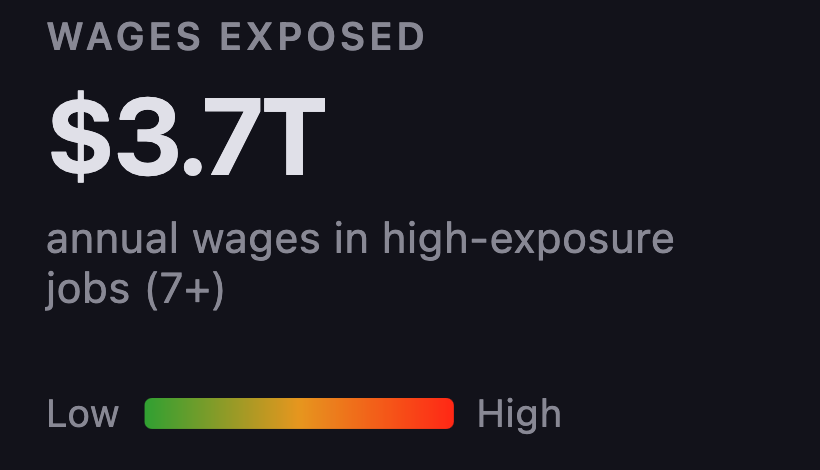
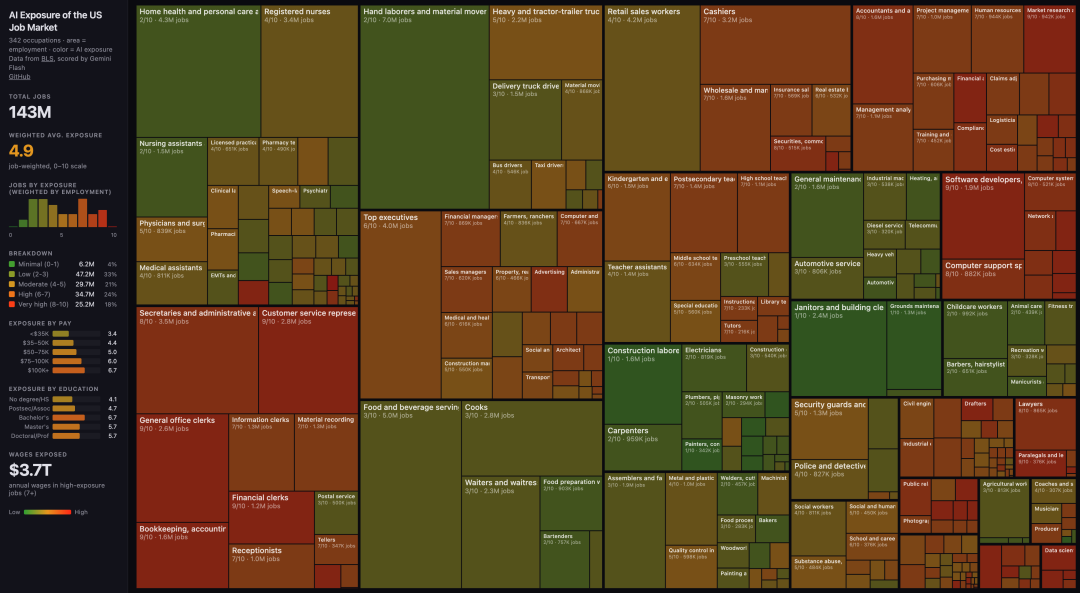
The project, hosted at karpathy.ai/jobs, was actually created by Josh Kale, an AI researcher who used government employment data and an AI model to score over three hundred occupations. The results were sobering. Nearly sixty million white-collar jobs in the United States alone are at high risk of automation. These positions represent over three trillion dollars in annual wages.
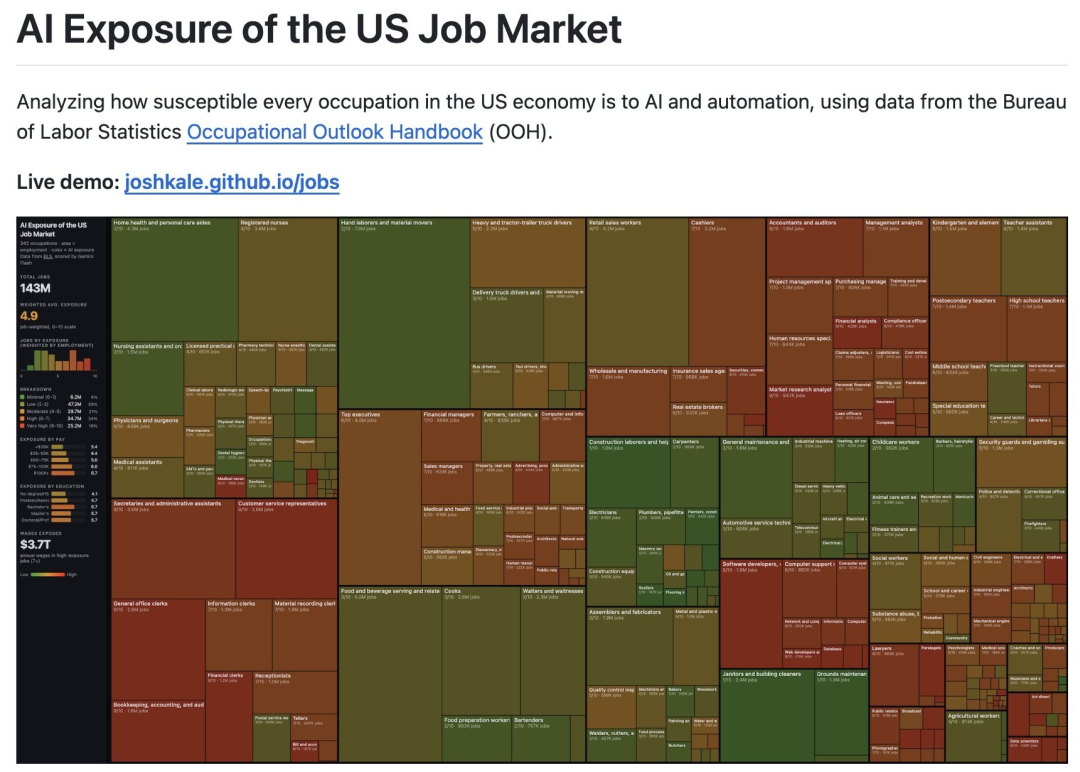
The methodology was straightforward. Kale took employment statistics from the Bureau of Labor Statistics, which tracks three hundred forty-two different occupations covering one hundred forty-three million jobs. He then used Google’s Gemini Flash model to rate each position on a scale of zero to ten, where ten means the job can be completely performed by AI today.
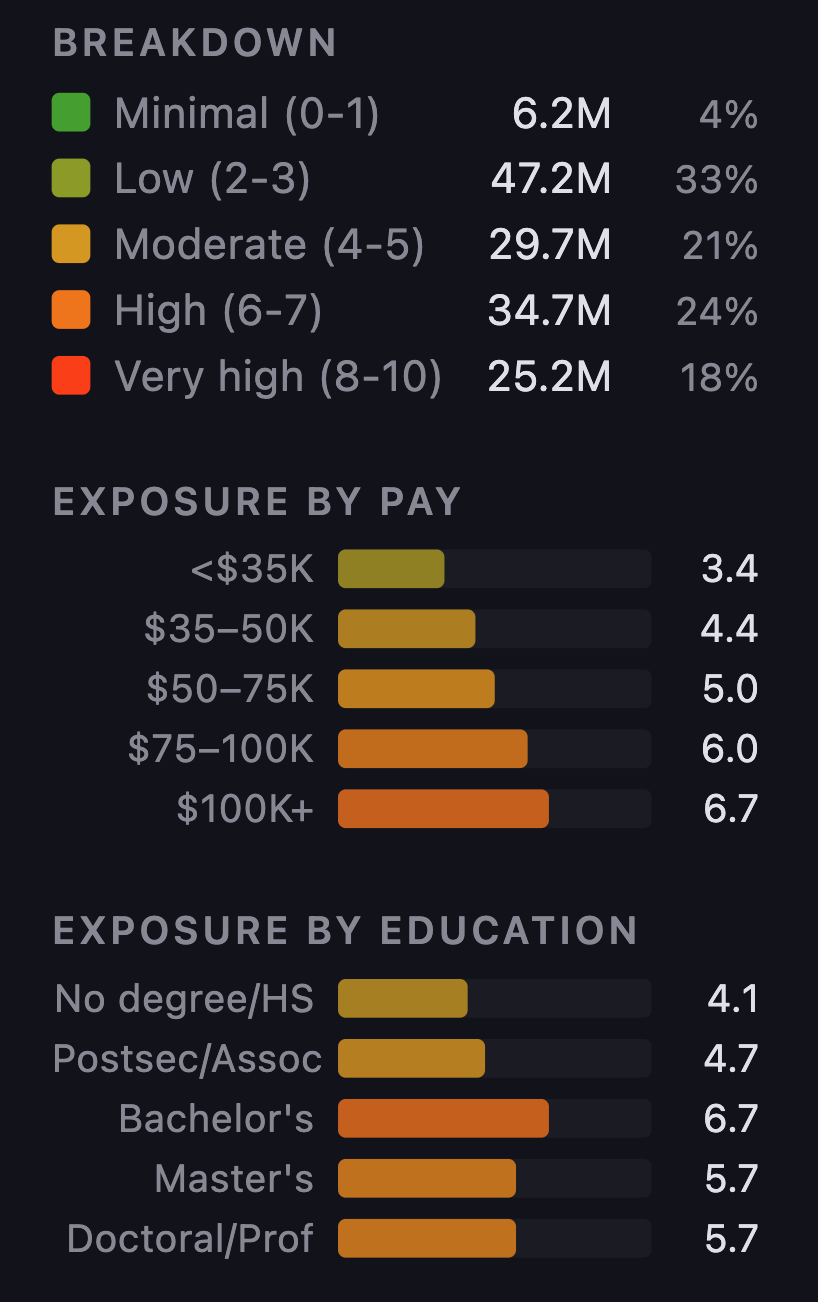
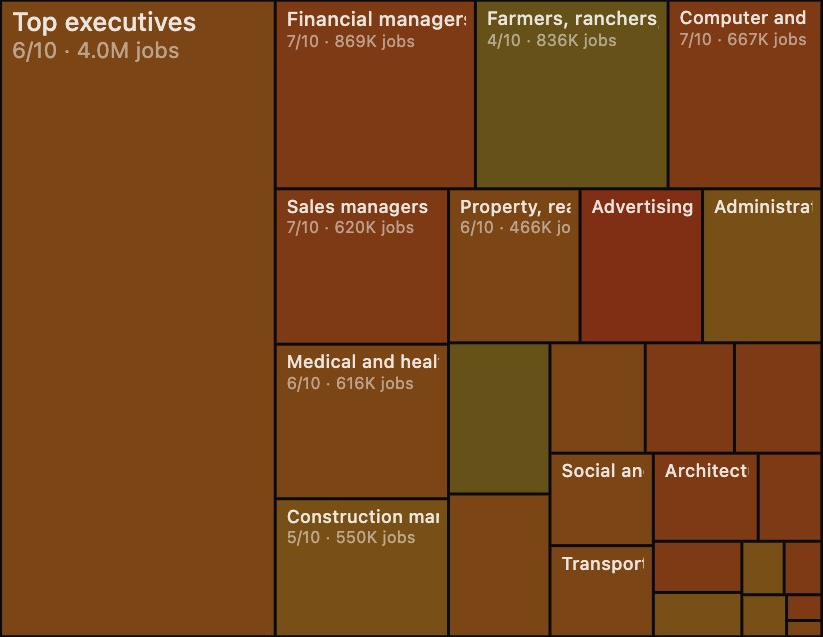
The average score across all occupations was four point nine. That might sound moderate, but the distribution tells a more alarming story. Forty-two percent of all jobs scored seven or higher, placing them in the high-risk category. These are not future predictions. The analysis was based on what AI can already do right now.
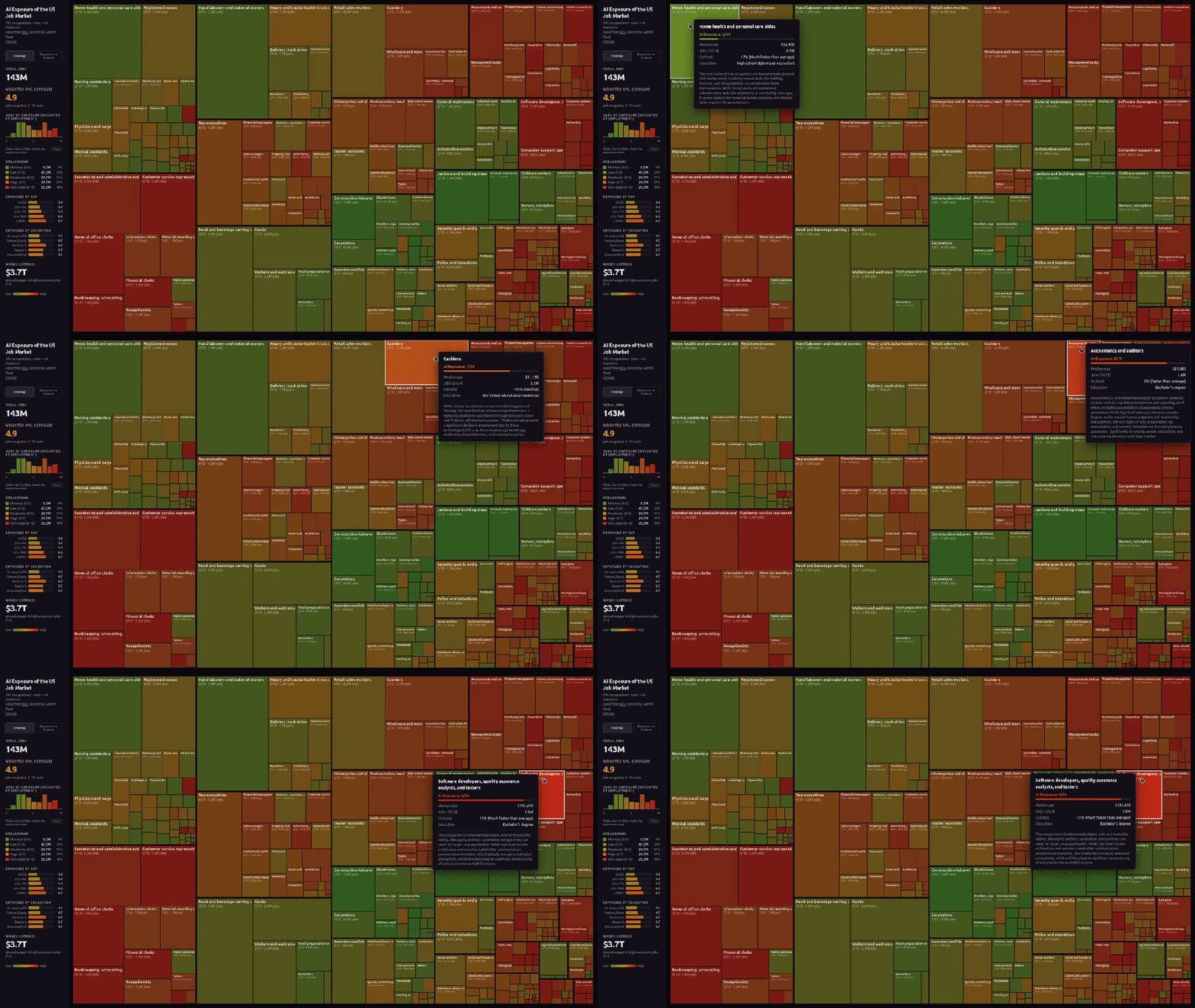
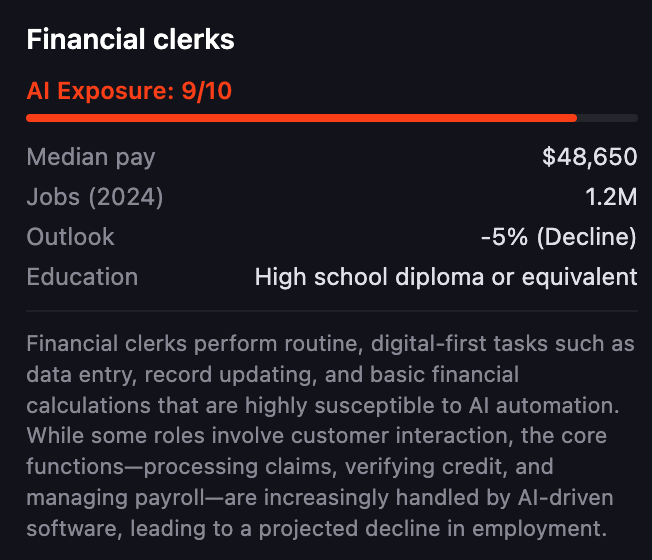
The most exposed jobs are exactly what you would expect. Office clerks, customer service representatives, receptionists, and bookkeepers top the list. These are roles that involve routine information processing, structured data entry, and standardized communication. In other words, they are jobs that consist of tasks that large language models have already mastered.
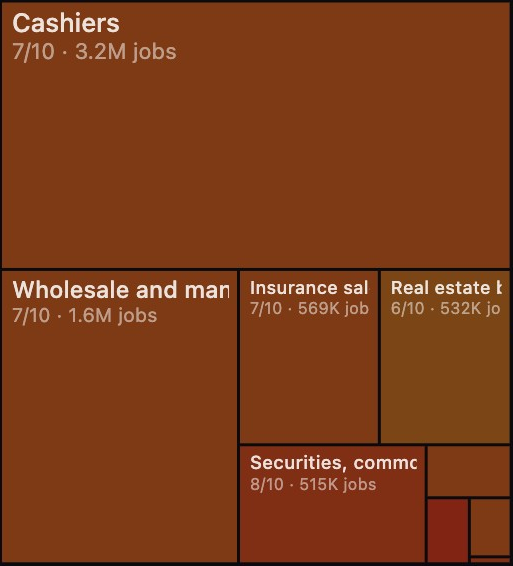
What surprised many people was the salary pattern. High pay does not equal safety. Jobs paying over one hundred thousand dollars per year scored an average of six point seven on the exposure scale. Jobs paying thirty-five thousand dollars scored only three point four. The correlation between income and protection is actually negative. The more you earn, the more likely AI can do your job.
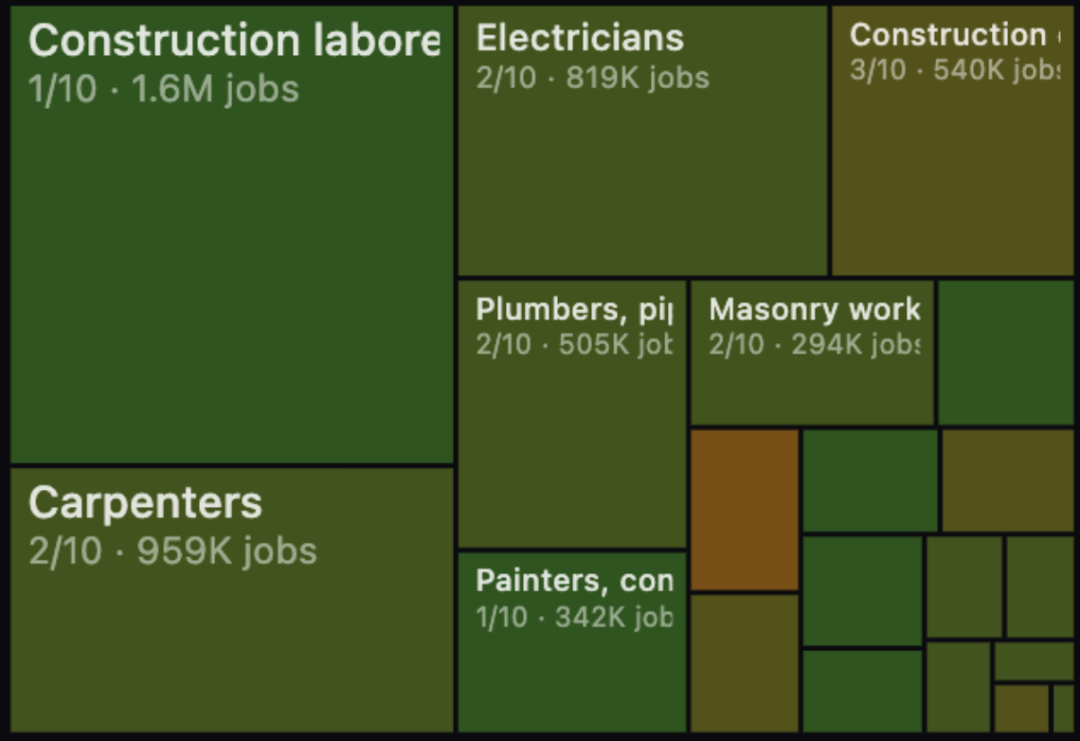
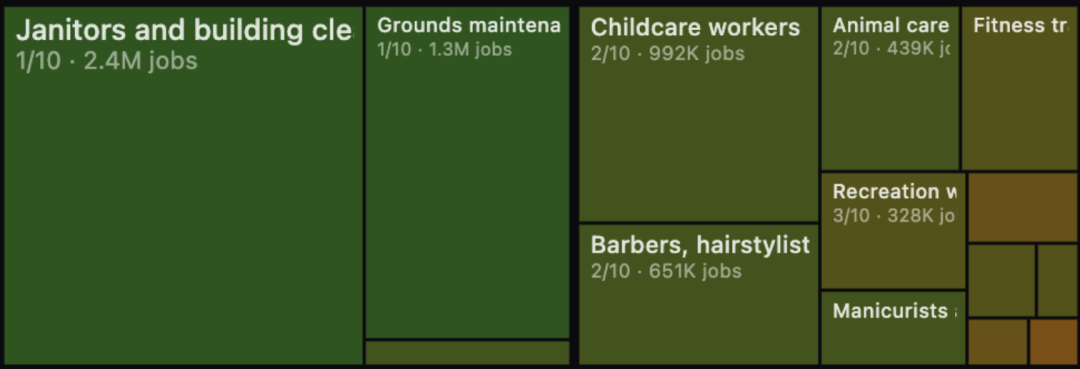
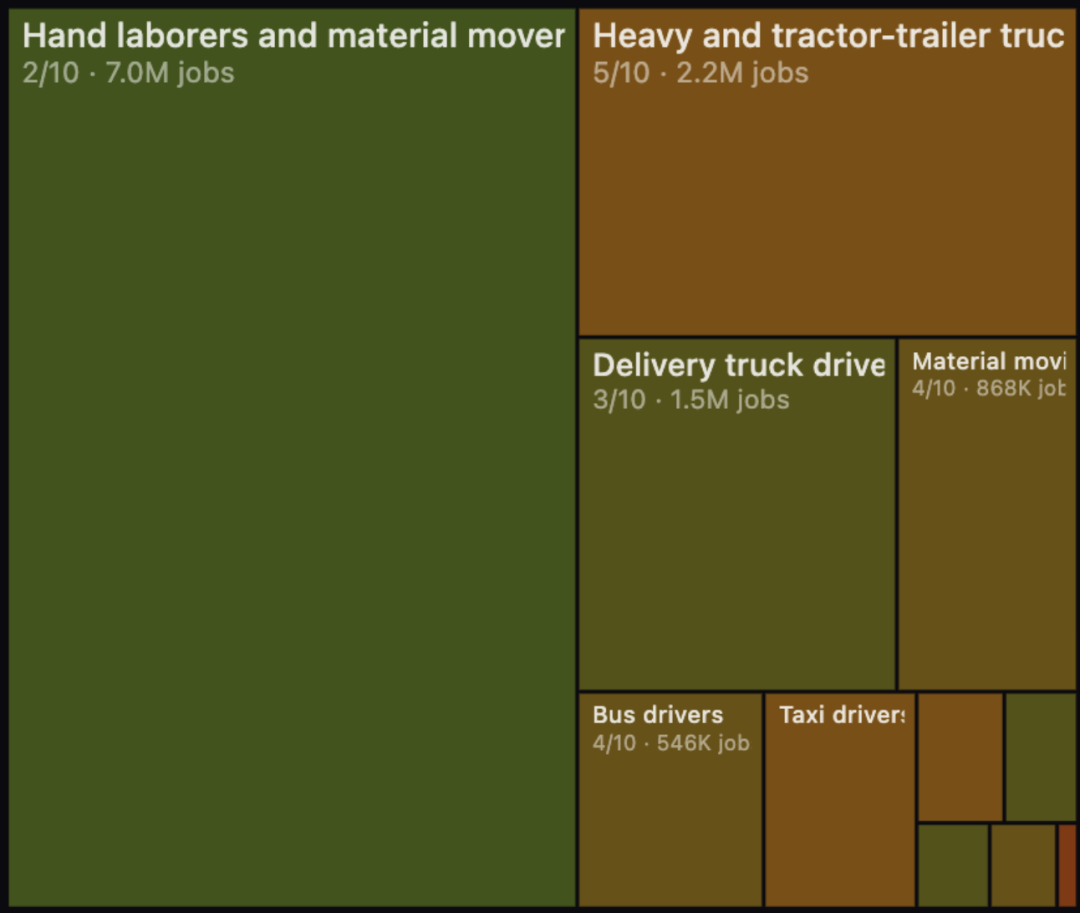
The safest jobs, by contrast, are almost entirely blue-collar. Plumbers, electricians, and maintenance workers have exposure scores near zero. These roles require physical presence, manual dexterity, and real-time problem solving in unpredictable environments. AI can write a perfect email, but it cannot fix a leaking pipe behind a wall.
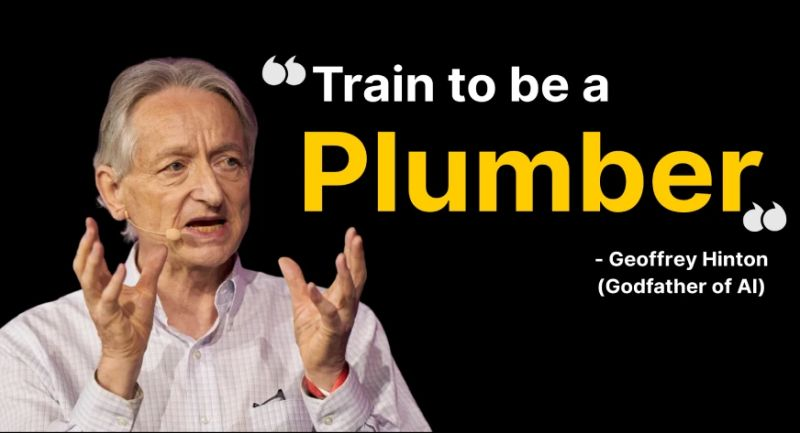
This reality has led to some unusual advice from the top minds in AI. Geoffrey Hinton, often called the godfather of deep learning, has publicly recommended that people learn plumbing. It sounds like a joke, but he is completely serious. In a world where cognitive work is increasingly automated, physical skills become more valuable, not less.
The Harvard Business School recently published a study that adds hard data to these concerns. Researchers analyzed millions of job postings from 2019 to March 2025. They found that after ChatGPT launched, high-paying jobs that require writing and analysis saw their hiring rates drop by ninety-five positions per month on average. That is a seventeen percent decline.
At the same time, low-paying jobs that require physical presence actually saw hiring increases. Warehouse workers, food service staff, and healthcare aides gained eighty positions per month, a twenty-two percent rise. The pattern is clear. AI is eating the middle and top of the job market while leaving the bottom relatively untouched.
The study used GPT-4o to analyze nineteen thousand job descriptions across nine hundred occupations. ai porn image generator For each position, the researchers calculated an automation score and a reinforcement score. The automation score measures how much of the job AI can already do. The reinforcement score measures how much AI makes the human worker more productive.
The results were striking. In highly exposed jobs, AI can handle twenty-four percent of key tasks. The remaining ai slut work becomes simpler and more standardized. Workers in these roles find themselves managing AI outputs rather than creating original work. Over time, the number of humans needed drops.
In reinforced jobs, by contrast, AI handles only fifteen percent of tasks but makes the human worker significantly more effective. These roles require judgment, creativity, physical coordination, or emotional intelligence. The AI becomes a tool that amplifies human capability rather than replacing it.
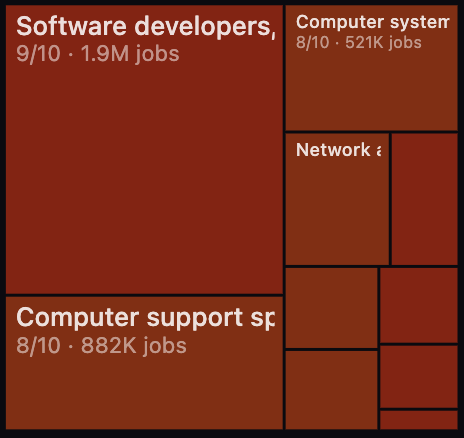
The Harvard study also revealed a disturbing paradox. The jobs most at risk are often those that require the most education. Lawyers scored nine out of ten for automation exposure. Database scientists scored nine out of ten. Software engineers scored eight out of ten. These are roles that society has traditionally encouraged young people to pursue. They represent years of expensive training and high student debt.
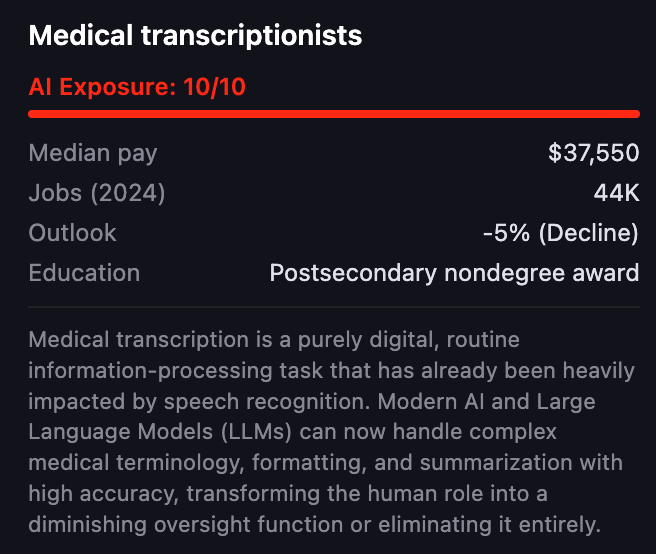
Medical transcriptionists turned out to be the most exposed occupation of all. Their entire job consists of converting audio recordings into text, a task that AI voice recognition systems now perform with near-perfect accuracy. The profession is essentially finished.
But the story is not entirely bleak. The analysis also identified a significant number of jobs that remain genuinely safe. These fall into several categories. First, jobs that require complex physical work in unpredictable environments. Plumbers, electricians, and HVAC technicians cannot be replaced because every building is different, every problem is unique, and the work requires hands that can feel, tools that can turn, and bodies that can crawl into tight spaces.
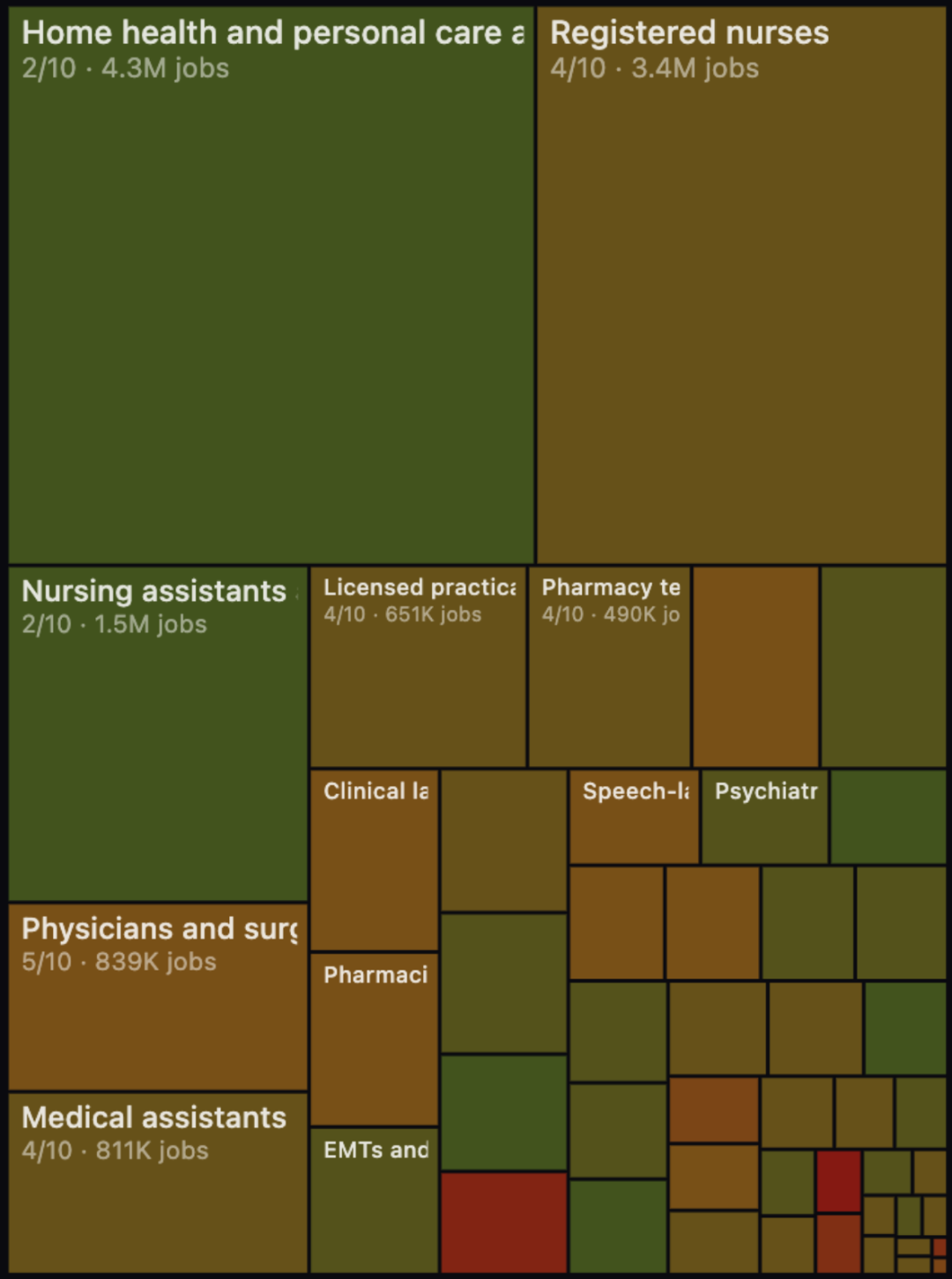
Second, jobs that require human connection and emotional intelligence. Nurses, therapists, and social workers interact with people during vulnerable moments. The physical presence, the eye contact, the reassuring touch, these cannot be digitized. AI can help with documentation and scheduling, but it cannot hold a patient’s hand.
Third, jobs that require real-time judgment in high-stakes situations. Surgeons, emergency responders, and pilots make split-second decisions where mistakes cost lives. The legal and ethical responsibility for these decisions must rest with a human being, not an algorithm.
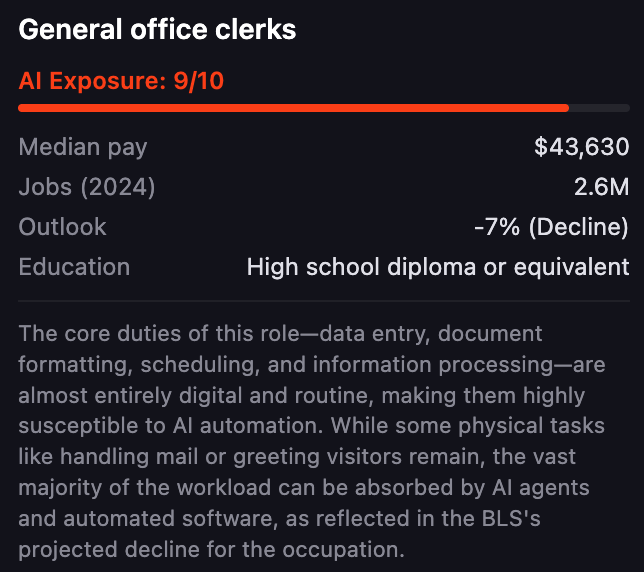
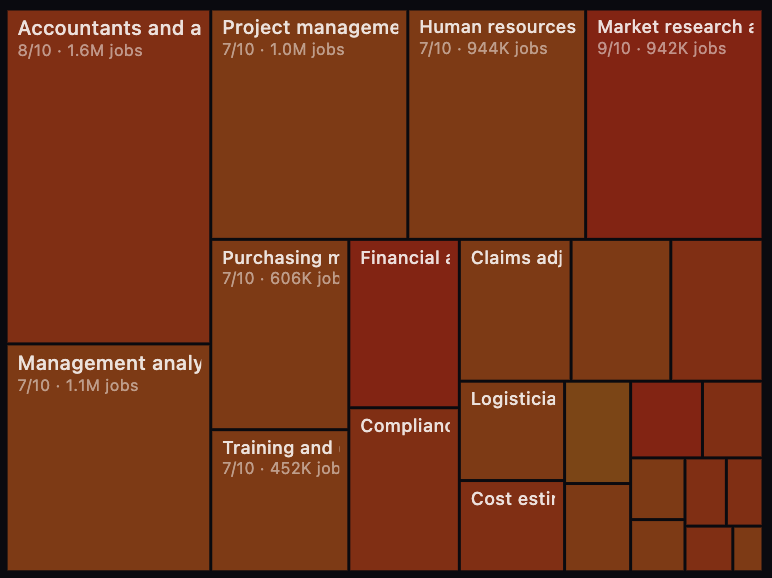
The data also reveals an interesting pattern about job categories. Administrative support roles are almost universally exposed. Nine out of ten office clerks, secretaries, and administrative assistants face high automation risk. Their work involves scheduling, document preparation, data entry, and routine communication, all tasks that AI handles effortlessly.
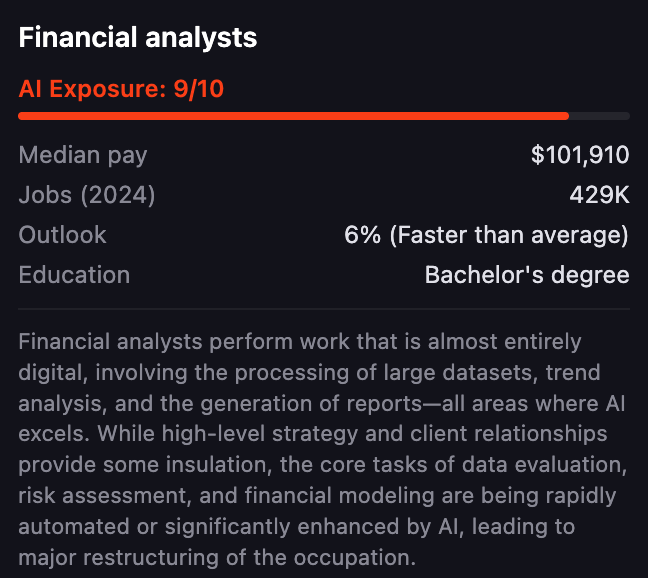
Business and financial operations roles are similarly vulnerable. Accountants, auditors, and financial analysts deal with structured data and standardized rules. AI can process tax returns, detect anomalies in financial records, and generate compliance reports faster and more accurately than humans.
But here is where the analysis gets more nuanced. The researchers emphasize that AI does not eliminate jobs. It eliminates tasks. A lawyer still exists, but the junior associate who used to spend forty hours a week reviewing documents now spends ten hours supervising an AI that does the review in minutes. The job changes, the headcount drops, and the remaining lawyers do different work.
This task-level disruption is harder to measure than job-level elimination, but it is arguably more significant. When AI handles the routine parts of a profession, the economics of that profession shift. Fewer entry-level positions are needed. The path to senior roles becomes steeper. The entire career ladder changes shape.
Dario Amodei, the CEO of Anthropic, has predicted that AI will replace junior lawyers within six to twelve months. The legal profession is already seeing this happen. Document review, contract analysis, and legal research, tasks that once required armies of young lawyers, are now handled by AI systems that work around the clock without billing by the hour.
The same pattern is emerging in software engineering. Entry-level coding tasks, bug fixes, and routine testing are increasingly automated. The junior developer who used to spend months learning by writing simple functions now finds that an AI can generate those functions in seconds. The learning path is disrupted.
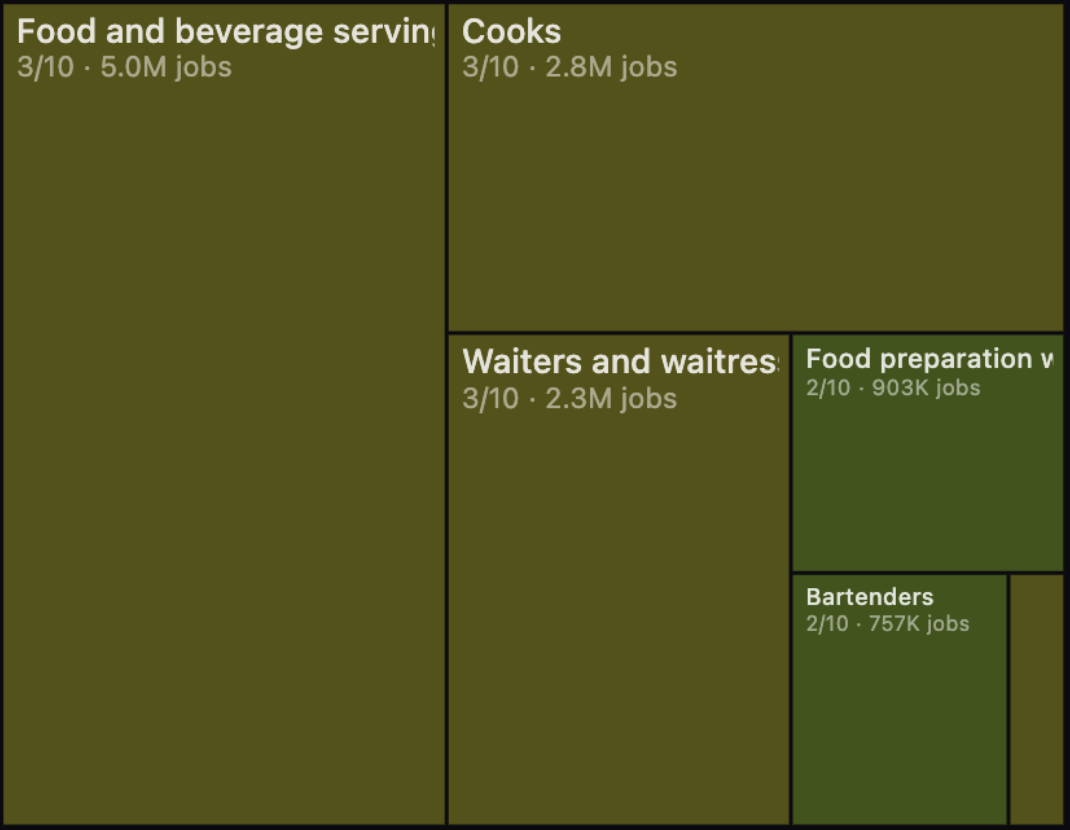
About thirty percent of occupations show essentially zero exposure to AI. These are not just manual labor jobs. They include chefs, who must taste and adjust recipes in real time. They include dentists, who perform precise physical procedures in small spaces. They include security guards, who must assess threats and make judgment calls in unpredictable situations.
The common thread among safe jobs is not income level or education requirement. It is the need for physical presence, real-time adaptation, and human judgment. If a job can be described in a document, AI can probably learn to do it. If a job requires showing up, looking around, and figuring out what to do, it is much harder to automate.

After the project went viral, Karpathy deleted the repository. He explained that it was just a fun weekend project, built in two hours, and not intended to cause panic. But the panic had already spread. Social media exploded with discussions about the data. News outlets picked up the story. And workers across industries began asking the same question. Is my job safe?
The deletion itself became a story. Some speculated that Karpathy faced pressure from employers or investors. Others suggested that the data was too politically sensitive. The most likely explanation is simpler. A hastily built project that was never meant for mass consumption suddenly found itself at the center of a global conversation about the future of work. That is a heavy burden for a weekend experiment.
But the underlying reality remains unchanged. The data came from official government sources. The scoring was done by a standard AI model. The methodology was transparent. Whether the website exists or not, the numbers tell a clear story.
What should people do with this information? The honest answer is that no one knows for sure. The AI landscape changes too quickly for confident predictions. But some principles are emerging. First, skills that combine technical knowledge with physical presence are likely to remain valuable. A plumber who understands smart home technology is safer than either a traditional plumber or a pure software engineer.
Second, roles that require genuine human connection will be harder to automate. Teachers, coaches, therapists, and caregivers work with people, not data. The value they provide is deeply personal and context-dependent.
Third, the ability to work with AI rather than against it is becoming essential. The jobs that survive will not be the ones that AI cannot do. They will be the ones where humans use AI to do more than either could accomplish alone. The lawyer who leverages AI for research and focuses on strategy and client relationships. The doctor who uses AI for diagnosis and focuses on treatment and patient care. The engineer who uses AI for coding and focuses on architecture and innovation.
The Karpathy job project, however brief its existence, has done something valuable. It has made the abstract threat of AI automation concrete and measurable. It has given workers a way to assess their own exposure. And it has started a conversation that society desperately needs to have.
Sixty million jobs at risk. Three trillion dollars in wages. These are not just numbers. They represent millions of real people with families, mortgages, and dreams. The technology that is disrupting their livelihoods is not slowing down. The question is whether we can adapt quickly enough to build new opportunities at the same pace that old ones disappear.
Hinton famously said that we should learn plumbing because it is safe from AI. The data suggests he was right, but perhaps not complete. The safest path forward is not to abandon knowledge work entirely, but to combine it with skills that AI cannot replicate. Technical expertise plus physical presence. Analytical ability plus human connection. Digital fluency plus real-world judgment.
The future belongs to people who can do what AI cannot, while using AI to do what humans have always struggled with. That is the real lesson of the job exposure data. Not that we are all doomed, but that we all need to change. The question is who adapts fast enough.

CADOAN is a professional, independent AI industry blog and information platform dedicated to the research, sharing, and popularization of artificial intelligence. We are a team of AI enthusiasts, researchers, and technical writers who focus on the development and application of modern artificial intelligence. We do not represent any commercial institution, technology company, or AI model camp. Our only position is to provide real, objective, and valuable AI content for readers, learners, developers, and business practitioners around the world.